
Spades Ace
SATORISYS PLAYCard
4.6202.00 Reviews
- Version
- 0.0.7
- Installs
- 50.00K
- Age Rating
- Teen
Screenshots
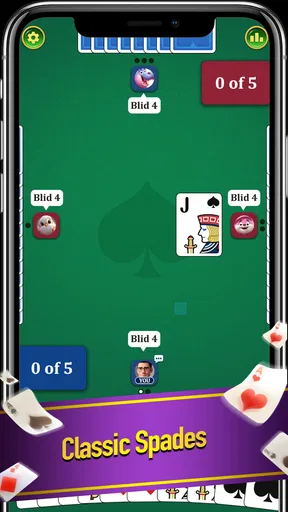
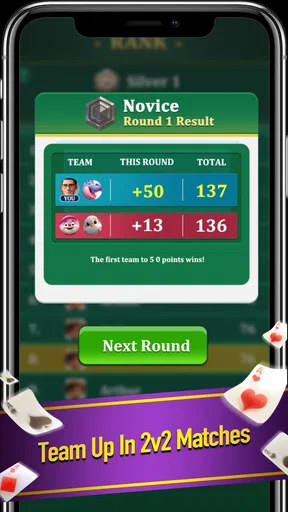
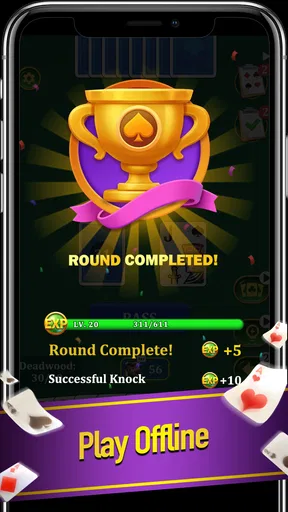
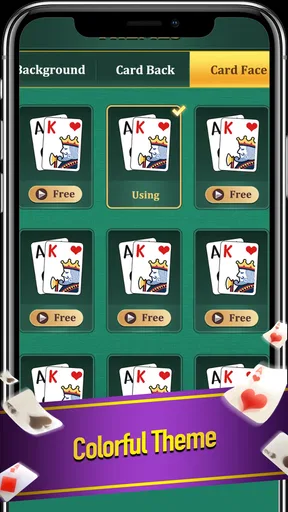

Our Review of Spades Ace
 Analysis by Appyee
I approached Spades Ace as a compact way to play a familiar team card game rather than as a large, content-heavy mobile experience. Its focus is clear: four players form two teams and compete through trick-taking rounds, with the card decisions carrying most of the tension. That narrow focus is a strength when I want a straightforward match, although it also means the experience depends heavily on how much I enjoy the classic rules and the rhythm of repeated hands.
The game is free, belongs to the card category, and comes from SATORISYS PLAY. It is aimed at Teen players, runs on Android version 9 or later, and is currently listed as version 0.0.7. Those details place it in an early stage of its life, so I see it as a focused starting point rather than a fully expanded card platform. The store summary describes it as a classic four-player team trick-taking game, while the short title description simply calls it Spades Ace. That simplicity matches the way it plays: the appeal is in reading the table, managing risk, and helping a partner without being able to speak openly during a hand.
How the first matches establish their goals
The early goal is easy to understand, which makes the game approachable even if someone has not played Spades recently. I am not trying to collect a large set of cards, build a character, or learn a complicated interface. I am trying to estimate how many tricks my team can take, play toward that estimate, and avoid giving the opposing team the opportunities it needs. Every hand therefore creates a small plan before the first card is played.
That planning stage is more important than it may look. A strong hand can tempt me to promise too much, while a weak hand can still become useful if I protect the right cards and let my partner take the lead. The best early objective is not simply to win every trick. It is to make a realistic prediction, preserve flexibility, and notice what the other team appears to be holding.
For a new player, I recommend treating the first few rounds as observation rather than chasing perfect results. Watch which suits disappear, remember when high cards have already been played, and pay attention to whether your partner seems to be signaling strength through card choices. Even without a tutorial-heavy structure, those habits create a natural learning path. The game teaches through consequences: an optimistic bid leaves a visible cost, and a patient hand often shows why restraint matters.
A realistic everyday use case is a short break when I want something more thoughtful than a quick matching game but less demanding than a long strategy session. I can start with the intention of playing one or two hands, then stop after a natural round. The format works particularly well for people who already know the rules and want a familiar mental exercise without setting aside an evening for a larger game.
Players who expect a broad collection of modes, extensive customization, or a story-driven reason to keep returning may find the opening too plain. The early goals come from the card table itself. That is satisfying for traditionalists, but it will not suit someone who needs constant new objectives before the basic rules have had time to breathe.
What I look for before committing to a hand
My most useful adjustment was to stop judging a hand only by its strongest cards. A promising holding can be awkward if its suits are uneven, because winning early tricks may remove the control I need later. I also try to consider how my cards might support the team’s overall target instead of treating every trick as a personal victory.
Another practical tip is to separate immediate excitement from reliable value. Playing a powerful card early can feel safe, but it may reveal too much or waste a resource that would have mattered when the opposing team is close to its target. Holding back is not always correct, yet the possibility of waiting creates much of the game’s tension. This is one of the first signs that the app rewards attention more than speed.
Progress signals that come from play rather than spectacle
Spades Ace does not need an elaborate progression layer to show improvement. My progress is visible in the quality of my decisions. I begin by reacting to individual cards; with experience, I start tracking the shape of the hand, the likely distribution of suits, and the difference between a safe trick and a dangerous one. That shift is subtle but meaningful, because it gives repeated matches a reason to feel different even when the basic rules remain familiar.
The clearest progress signal is improved prediction. I know I am getting better when my estimates become less emotional and more grounded in the actual cards. I also become more comfortable accepting a small loss to prevent a larger one. In a team game, that change matters: sometimes the correct move is to let the partner take a trick, protect the team’s target, or avoid helping an opponent establish control.
This kind of progression is especially appealing to players who like traditional games that reveal their depth slowly. There is no need for a long explanation before the first match. Instead, each completed hand gives me information I can use immediately. The trade-off is that players who want visible unlocks, ranks, rewards, or a strong sense of account growth may not feel the same momentum.
I would also use the rating as a modest sign that the core idea has found an audience. The game holds a 4.8 average from around 864 ratings, with 45 written reviews and over 10 thousand installs. Those figures suggest encouraging reception, but they should not replace personal testing. A high rating can tell me that many players enjoy the central experience; it cannot guarantee that the pacing, interface, or level of challenge will match my preferences.
Because the current version is 0.0.7, I would approach the app with sensible expectations about maturity. An early version can be perfectly enjoyable while still feeling narrower than a long-established card app. For me, that makes the game more attractive as a focused pastime than as the only card title on my device. I would keep it for its direct matches and use a broader alternative when I wanted more variety.
Small habits that make improvement easier
I found that remembering every card is less important than remembering the cards that change future decisions. High cards that have already appeared, suits that are nearly exhausted, and the moment a player can no longer follow a suit are more useful than trying to build a perfect mental transcript. This reduces mental load while preserving the information that affects the next trick.
I also recommend reviewing the hand immediately after it ends. Instead of asking only who won, I ask which decision first made the result difficult to recover from. Was the target too ambitious? Did I spend control too early? Did I overlook the partner’s likely plan? That quick review turns an ordinary match into a short training exercise and gives the app more lasting value than passive repetition.
Difficulty, pacing, and the pressure to continue
The difficulty curve in a classic trick-taking game is usually less about unlocking harder opponents and more about discovering how many layers are already hidden in simple rules. The first hands can feel relaxed because the objective is familiar. Later, the same rules become demanding when I start accounting for partnership, probability, timing, and the consequences of a single careless card.
That curve is gentle for beginners but potentially steep for players who want to play well. A newcomer can enjoy the immediate action without understanding every strategic detail. An experienced player, however, may quickly notice that small mistakes compound across a hand. The game’s challenge comes from incomplete information and limited communication, not from a growing list of mechanics.
Pacing is strongest when I accept that not every trick needs an instant answer. Rushing decisions can make the game feel like a sequence of isolated plays, while a short pause to consider what has already been shown makes the same round more engaging. I would not recommend it to someone looking for constant animation or rapid-fire action. Its energy is deliberate, and the quiet moments are part of the strategy.
The team structure creates a useful tension between personal control and shared responsibility. I may hold the key card, but the hand can still go badly if I misread the partner’s position. Conversely, a modest hand can contribute to a win through careful timing. That makes the game more socially interesting than a solitary high-score card puzzle, even when I am playing without direct conversation.
There is also a clear trade-off in the lack of a broader competitive context. For some players, the hand itself is enough. For others, motivation depends on leagues, seasonal goals, collections, or a visible long-term ladder. I would choose Spades Ace when I want the rules to provide the challenge. I would choose a more feature-rich card game when I need external milestones to maintain interest.
When the game fits and when it does not
This is a good match for someone who already enjoys Spades, wants a free mobile version of a four-player team format, and prefers decisions over decoration. It can also work for a casual player who is willing to learn through practice rather than expecting a long onboarding campaign. The Teen content rating is worth keeping in mind for households choosing games for younger children.
I would skip it if my priority were a large catalog of different card games, a rich solo adventure, or highly visible progression rewards. I would also look elsewhere if I needed a game designed around very short, frantic sessions. The core format asks me to follow the hand’s logic, and that is difficult to compress without losing what makes trick-taking enjoyable.
For someone deciding whether it belongs on a phone or tablet, the key question is simple: do I enjoy making plans with partial information? If yes, the free entry point makes trying it easy. If no, the familiar rules may feel repetitive rather than comforting. The app is not trying to disguise its identity, and I consider that honesty useful when choosing it.
My verdict on its long-term pull
Spades Ace sustains play through the gradual improvement of judgment rather than through a large progression system. Early goals come from estimating and fulfilling a team target. Progress appears when I read hands more accurately, protect useful cards, and understand the partner’s position. Difficulty grows as I move from playing cards individually to managing the entire shape of a round.
Its retention pressure is therefore healthy for the right audience but limited for everyone else. I return because I want to test a better decision, recover from a poor hand, or see whether a more disciplined plan works. I do not return because the app constantly presents new content or pushes me toward a collection milestone. That distinction matters: the game’s lasting appeal is skill-based and self-directed.
My biggest practical recommendation is to give it several deliberate sessions rather than judging it after one lucky or unlucky hand. The first match shows the rules; later matches reveal the trade-offs. Keep bids realistic, track only the information that changes your next move, and review one turning point after each hand. Those habits make the experience more rewarding without requiring complicated preparation.
Overall, I see this as a focused card game from SATORISYS PLAY that succeeds when I want classic team trick-taking in a simple mobile form. Its 4.8 average and growing audience are encouraging, while the free price removes the main barrier to trying it. Still, its narrow purpose and early version mean it is better viewed as a clean, skill-centered pastime than as a complete replacement for every card app.
My recommendation is straightforward: install it if the pleasure of Spades comes from reading the hand, cooperating indirectly with a partner, and improving one decision at a time. Choose another option if you need extensive modes, visible unlocks, or a faster and more varied style of play. For the right player, Spades Ace offers a satisfying reason to return: not because the game keeps changing, but because I keep seeing more in the same cards.
Privacy and Permissions
See what permissions an app requests and how it handles your data.
- Wi-Fi connection information
- view Wi-Fi connections
- Other
- view network connections, full network access, control vibration, prevent device from sleeping, Google Play license check
Verdict
Strengths of Spades Ace
- Smooth controls make bidding and playing cards feel intuitive.
- Offline mode lets you enjoy matches without an internet connection.
- Multiple difficulty levels suit both beginners and experienced players.
- Quick rounds work well for short gaming sessions.
- Clear card visuals make suits and ranks easy to recognize.
Limitations of Spades Ace
- Ads may interrupt the experience, especially between completed rounds.
- Advanced strategy options may feel limited for competitive players.
- The AI can occasionally make predictable or questionable plays.
- Online matchmaking may depend on an active player base.
- Some features or customization options may require in-app purchases.
Other Releases by SATORISYS PLAY
View All
Ball Sort - Color Puzzle Game
Casual4.7

Line Dash
Casual4.7

Gin Rummy King
Card4.7

Gin Rummy Classic
Card4.6
Similar Picks in This Category
View All
Solitaire - Classic Card Games
MobilityWare4.6

UNO!™
Mattel163 Limited4.3

Spider Solitaire: Card Games
MobilityWare4.6

Solitaire.com - Classic Cards
Tripledot Studios Limited4.7

Plants vs. Zombies™ Heroes
ELECTRONIC ARTS4.1

Hearthstone
Blizzard Entertainment, Inc.4.1
Frequently Asked Questions
What is Spades Ace, and how does the game work?
Spades Ace is a digital version of the classic Spades card game, where players compete in teams and bid on the number of tricks they expect to win. The app generally combines traditional rules with online matches, computer opponents, progression systems, and customizable settings. Before downloading, players should check which rule variations, scoring options, and game modes are included in the current version.
Can I play Spades Ace offline without an internet connection?
Spades Ace may offer gameplay against artificial intelligence without requiring a constant internet connection, but online multiplayer features normally depend on an active connection. Offline availability can vary by platform and app version, so it is worth checking the store description before installing. If you mainly want solo card games while traveling, confirm that the intended mode remains accessible when your device is offline.
Does Spades Ace support online multiplayer with friends?
One of the main reasons to download Spades Ace is usually the opportunity to play Spades against other people, including friends or online opponents. However, multiplayer options may differ between versions, with some releases offering private tables, invitations, matchmaking, rankings, or limited social features. Review the current feature list and any user reports to confirm whether the multiplayer experience matches what you expect.
Is Spades Ace free to download, and does it contain advertisements or purchases?
Spades Ace may be available as a free download, but free access does not always mean that every feature is included without limitations. Many card games use advertisements, optional purchases, premium currencies, or subscriptions to remove ads and unlock additional content. Check the Google Play or App Store listing for pricing details, in-app purchase information, and whether advertising can affect the pace of a match.
Is Spades Ace suitable for beginners who are unfamiliar with Spades?
Spades Ace can be suitable for beginners if it includes tutorials, rule explanations, hints, or practice games against computer-controlled opponents. New players should still understand the basics of bidding, following suit, trumping with spades, and meeting the team’s contract. Difficulty settings are also important, since strong artificial intelligence or experienced online players may make the first few matches challenging.
Play our best games!


